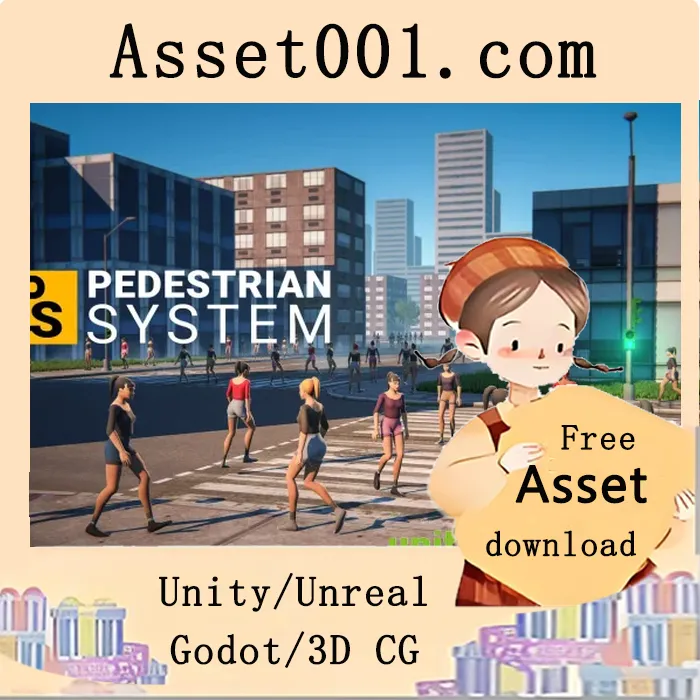
Mobile Pedestrian System v1.5.3 (19 Mar 2026) introduces a realistic and vibrant urban pedestrian environment with a customizable waypoint-based system. The system supports any humanoid characters and animations, using root motion from character animators for natural movement. It operates on a grid system, enabling efficient performance across all scene dimensions. Key features include dynamic obstacle avoidance, pathfinding between waypoints, and the ability to assign pedestrian types to restrict access to specific areas (e.g., students only in campus). Priority waypoints allow control over pedestrian density, such as increasing pedestrians in crowded downtown areas. Custom events can trigger dynamic actions when pedestrians reach specific waypoints. The system supports both traffic lights and no-traffic-light crossings, with an independent crossing component for integration with vehicle systems. Seamless integration is available with the Mobile Traffic System. Pedestrians can follow predefined paths or be directed to a destination anywhere in the scene. The system includes pooling and reutilization for performance optimization, custom editor tools for smooth integration, and a simple API for advanced functionality. Complete, commented code is provided, and the system is compatible with Unity 2021.3 LTS and above, including Unity 6. It works on all platforms supporting the Burst compiler.
2026-03-20 00:00:00-update version:Mobile Pedestrian System v1.5.3 (19 Mar 2026)